About
Living between
cultures.
Living between cultures isn't about losing who you are — it's about expanding who you can become.
Living between cultures isn't about losing who you are — it's about expanding who you can become.
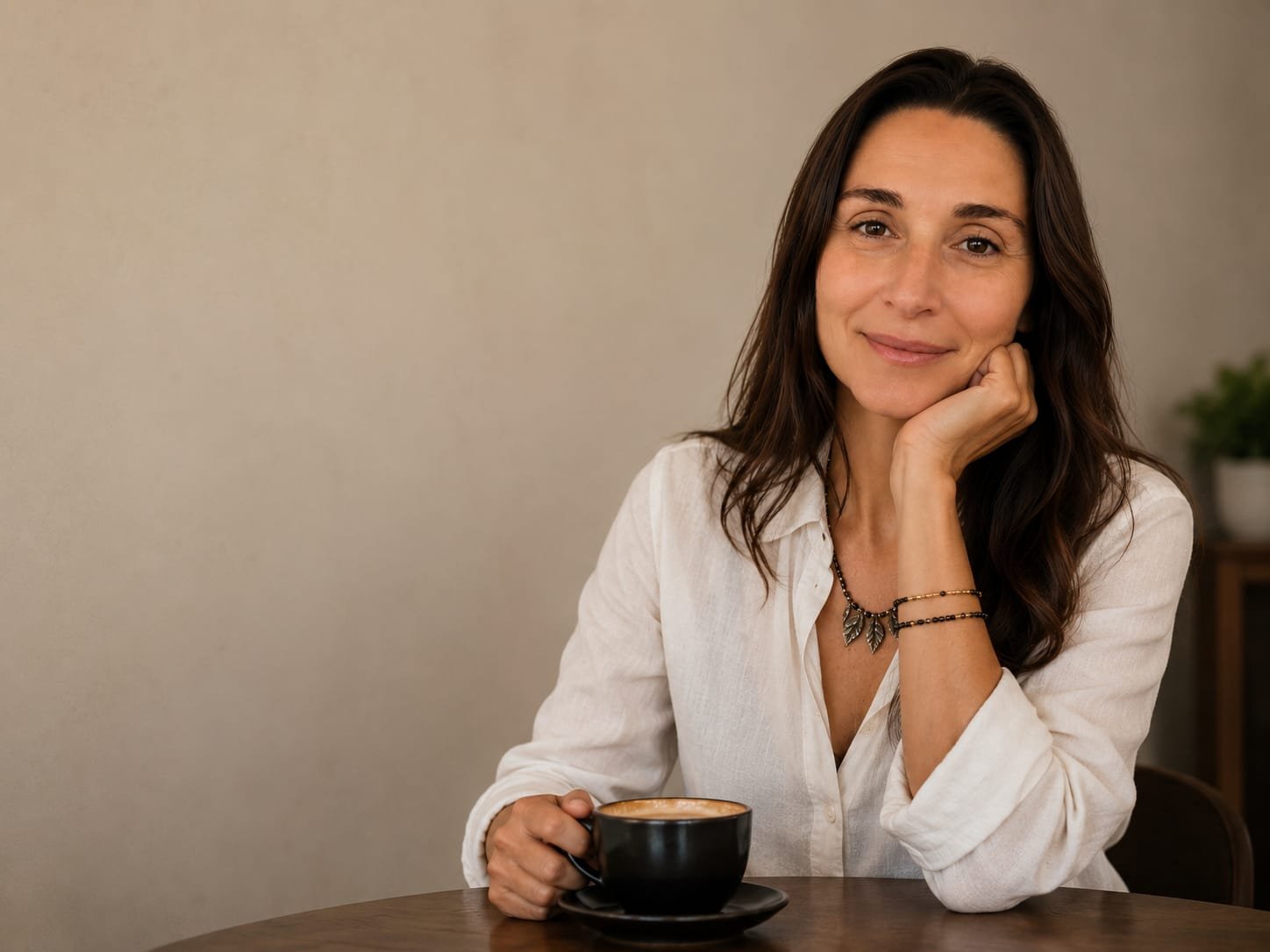
I was born in Brazil, into a family with Italian roots — a background that, even early on, connected me to more than one culture.
In 2009, I moved to South Africa in search of an international experience, both personally and professionally. What I didn’t know at the time was how deeply this journey would shape not only who I am, but also the work I do today.
Living between cultures, I experienced firsthand the challenges of adapting to a new country, navigating different values, ways of communicating, and ways of relating. I came to understand the grief of distance, the impact of building a career in a new context, and the daily effort of expressing yourself in another language.
I also experienced the complexity and richness of an intercultural marriage, and the unique journey of raising a cross-cultural kid (CCK). These experiences are not just part of my story — they are at the heart of my work.
I graduated in Psychology in Brazil in 2005, and began my career working in Human Resources, focusing on recruitment and training for over a decade.
At the same time, I gradually transitioned into clinical work, which became my primary focus in 2007. After moving to South Africa, I continued my academic and professional development, completing my Honours degree in Psychology, as well as masters and practitioner in NLP and Cognitive Behavioural Therapy (CBT). Graduated in Cultural Psychology in 2025.
Throughout these years, I worked closely with clients as a bilingual therapeutic mentor, supporting individuals and couples navigating the complexities of living between cultures.
Over time, I began to notice a clear pattern. Regardless of background, many of my clients were facing similar challenges: communication difficulties, cultural misunderstandings, and a deep sense of not feeling fully understood or that they truly belong.
It became clear that these experiences were not isolated — they were part of a broader intercultural dynamic.
From this experience, I developed two structured intercultural frameworks designed to support both couples and individuals navigating life between cultures.
A structured approach created specifically for intercultural couples, helping partners navigate cultural differences, improve communication, strengthen emotional connection, and build healthier relationships across cultures.
A structured mentoring process designed for individuals living abroad who are navigating identity shifts, adaptation challenges, migratory grief, and the emotional experience of rebuilding a sense of belonging in a new country.
Both methods integrate intercultural psychology, emotional awareness, and practical tools to support deeper connection, clarity, and emotional stability while living between cultures.
Working with intercultural couples and individuals living abroad is more than my profession — it is deeply connected to my own journey and to the experiences I have witnessed throughout years of clinical and intercultural work.
I am passionate about helping people feel understood, emotionally grounded, and connected to themselves — especially during moments when living between cultures begins to challenge identity, relationships, and the sense of belonging.
Through my work, I have come to understand that many of the struggles people experience abroad are not simply about adaptation. Often, they are about navigating invisible emotional transitions: identity shifts, cultural disconnection, grief, communication challenges, and the complexity of rebuilding life in a different cultural context.
This understanding is what led me to develop both the C.L.E.A.R. Method for intercultural couples and the B.R.I.D.G.E. Method for individuals living abroad.
Because when cultural differences are understood with depth, sensitivity, and awareness, they can become not a source of distance — but a path toward deeper connection, clarity, and transformation.
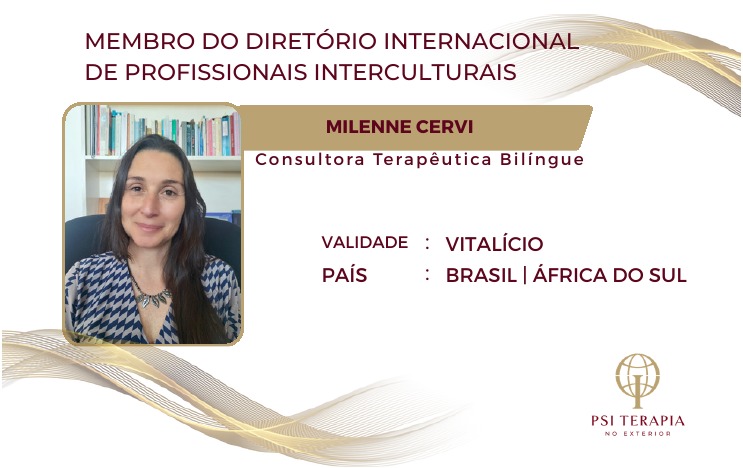
Milenne Cervi is a Lifetime Member of the International Directory of Intercultural Professionals, recognised across more than 25 countries.
Countries: Brazil | South Africa